
Empty Lip Gloss Tubes Wholesale
Choosing the right lip gloss tube affects more than how a product looks on a shelf — it affects how the formula is protected, how customers apply it, and how consistent every batch looks once it reaches the market. We manufacture empty lip gloss tubes and containers for lip gloss, lip oil, lip serum, and other liquid lip products, covering everything from standard round and square shapes to fully custom-developed packaging.
Brands work with us at different stages: some need a reliable standard tube to launch quickly, others come with a sketch or a reference sample and need a private mold built from scratch. Either way, our team stays involved from component selection through mold development, injection molding, decoration, inspection, and final packaging.
Featured Lip Gloss Tube Designs
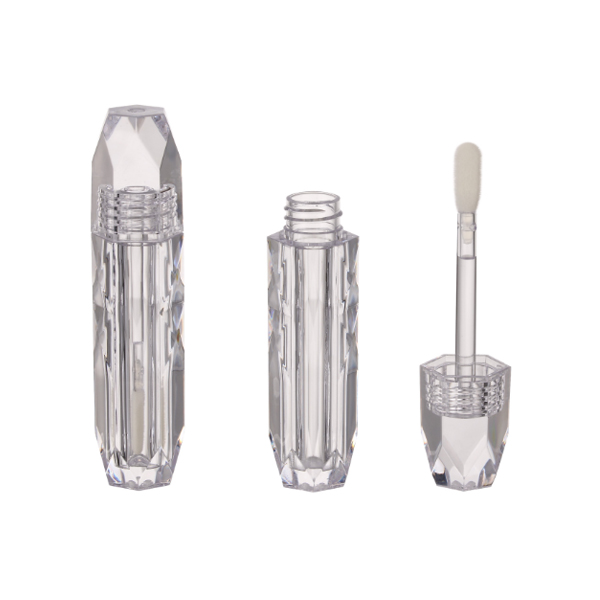
A crystal-clear, diamond-cut tube that gives a glass-like look without the weight or breakage risk of actual glass — a straightforward way to add a premium feel to a line without changing the formula.
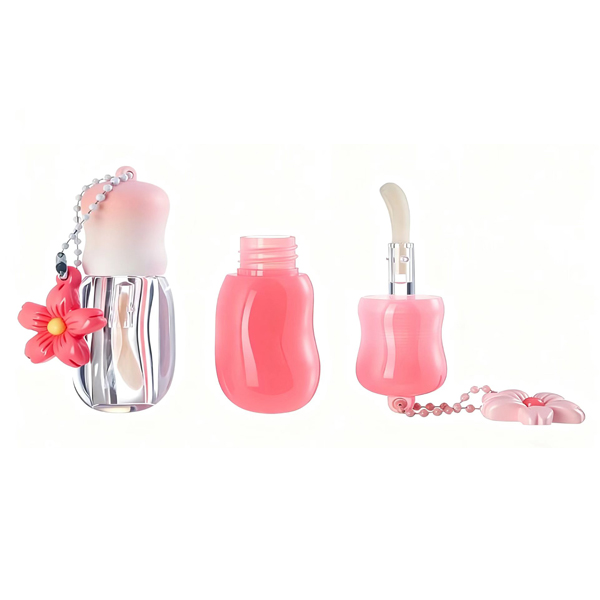
The charm detaches and can be swapped between flowers, hearts, stars, or butterflies, which makes this a natural fit for gift sets or limited-edition drops aimed at a younger audience.
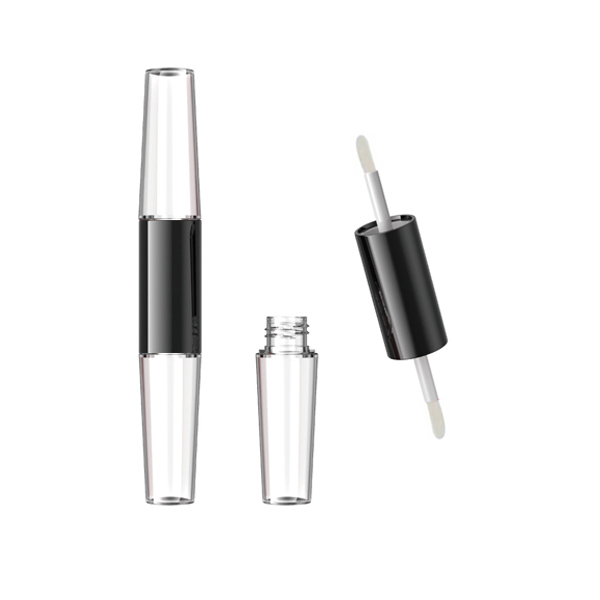
Two chambers, two wands, one tube — useful for brands pairing a color with a topcoat, or two shades in a single SKU.
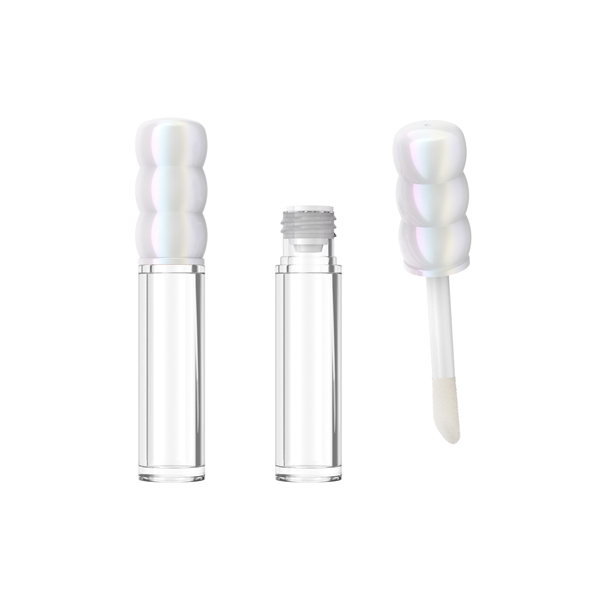
Fully recyclable PET for brands prioritizing sustainability claims without giving up clarity or shelf presence.
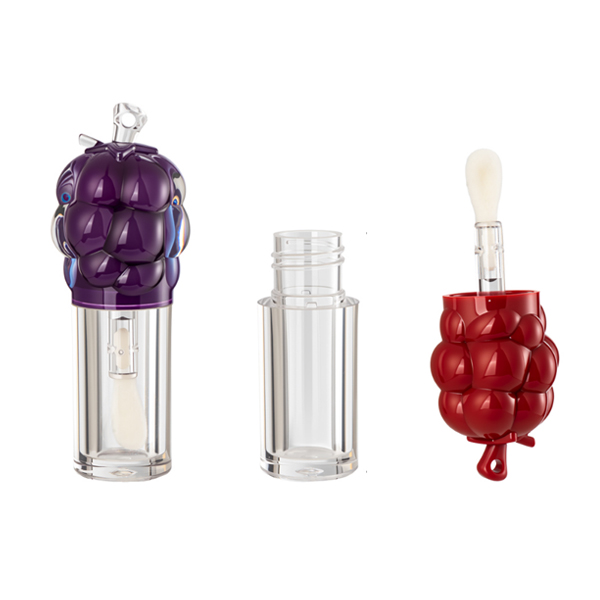
A playful cap silhouette that tends to perform well in social-first launches — the shape itself photographs well for TikTok and Instagram unboxing content.
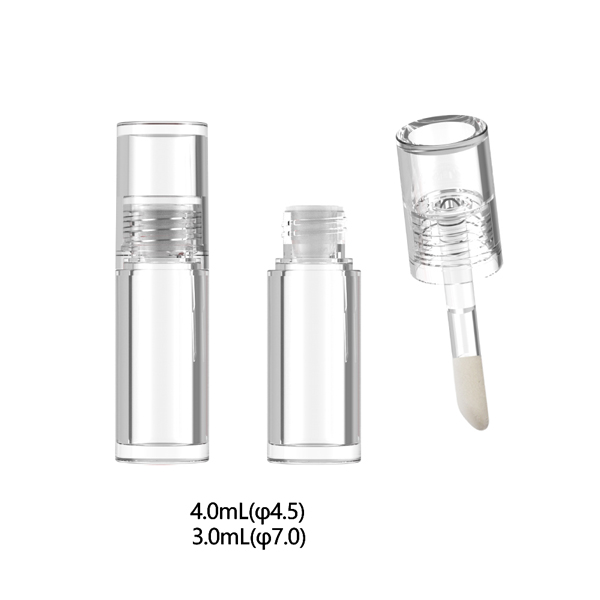
A classic round profile available with large- or small-diameter stem options, so the internal structure and fill capacity can be tuned to the project.
Choosing the Right Container for Your Brand
Capacity, material, applicator design, sealing performance, and surface decoration all affect how a package performs once it’s filled and in a customer’s hands. None of these decisions sit in isolation — a change in stem diameter, for instance, changes how much product a customer picks up per swipe, which changes how fast they go through a tube. We walk through these trade-offs with brands before anything goes into mold development.
Standard Designs
Our standard collection covers practical round and square profiles across a range of sizes and capacities — built for brands that want to launch a new lip product without starting packaging development from a blank page. Several of these series have multiple molds behind them, so size and capacity can shift within an established design direction rather than requiring an entirely new tube.
Custom Designs
For brands after something more distinctive, we develop custom structures and private molds from drawings or a product concept. Our design team also tracks current beauty packaging trends and brings new shapes and functional ideas to brands looking to stand apart from what’s already on shelf.
Available Capacities & Sizes
Capacity is one of the first decisions to lock down, since it shapes almost everything downstream — tube wall thickness, stem length, even which applicators are compatible.
Our standard series runs from roughly 2 ML to 5.5 ML, with additional capacities possible depending on the structure and mold selected.
Mini & Sample Sizes
Smaller capacities work well for:
– Product samples
– Promotional sets
– Travel-size products
– Trial products
– Beauty gift sets
Standard Lip Product Sizes
Mid-range capacities are the most common choice for:
– Lip gloss
– Lip oil
– Lip serum
– Other liquid lip products
This range tends to hit the best balance of product volume, portability, and packaging cost.
Capacity vs. Internal Structure
A tube’s visual size doesn’t always match its actual fill volume. Thick-wall construction, internal dimensions, and component design all affect both how full a tube looks and how much it actually holds — a 3 mL fill can be built into a tube that reads as a 5 mL package, which some brands use deliberately to create a more premium shelf presence.
Stem diameter plays into this too. We offer large-diameter and small-diameter stem options on select designs, each affecting the internal structure and usable capacity differently. Our general recommendation: settle on target fill volume together with the tube, stem, wiper, and applicator before finalizing a design — changing one after the others are locked tends to create rework.
Lip Gloss Container Components
A finished lip gloss package is really five parts working together — get one wrong and the whole assembly underperforms, no matter how good the others are.
Cap
The cap sets the first visual impression and protects the applicator assembly underneath. Cap color can be matched to a brand’s palette, product line, or decorative finish.
Tube Body
The tube body holds the formula and forms the main visible surface of the package. Depending on the design, we work in PETG, PET, and AS, in clear, frosted, or custom-tinted finishes. Transparent bodies matter most when brands want the product color — or the remaining fill level — visible to the customer.
Stem
The stem connects the cap assembly to the applicator head. Diameter and configuration vary by design, and the stem has to work correctly with both the wiper and the applicator to control how much formula comes out with each use.
Wiper
The wiper (inner plug) controls how much product the applicator carries out and keeps excess formula inside the tube rather than pooling at the opening. Its fit against the tube, stem, and formula viscosity determines whether wiping performance stays consistent use after use.
Applicator Head
The applicator head decides how the product gets picked up and applied — shape and material both matter here, and the right choice depends on the formula’s texture and the application experience you’re going for.
Material Options for Empty Lip Gloss Tubes
Material choice comes down to a trade-off between transparency, rigidity, chemical resistance, appearance, and cost. What’s “right” depends entirely on the formula going inside and where the finished package sits in the market.
PETG — High Transparency, Premium Feel
Glass-like clarity with real durability behind it. PETG holds up well against oils and fragrance components, which makes it a common choice for lip gloss and lip oil formulas where long-term chemical stability matters.
AS — Transparent and Cost-Conscious
Good transparency, hardness, and rigidity, at a lower cost than PETG. A practical fit for mass-market lines, promotional runs, or any project where transparent packaging needs to stay within a tighter budget.
PET — Clear and Practical
Reliable clarity for showing off product color and fill level, widely used across clear cosmetic packaging in general.
ABS — Built for Caps and Decoration
Strong impact resistance and a surface that takes decoration well, which is why it’s the default choice for caps and other components that need to survive handling and still look sharp.
PP — Stability for Internal Parts
Chemically stable and resistant to most common cosmetic ingredients, which is why it’s the standard for stems and other internal components that sit in constant contact with the formula.
Final material selection should always get confirmed against the actual formula and component requirements before mass production — this is one of the easiest places to catch a compatibility issue early instead of after a full production run.
Custom Colors, Printing & Surface Finishes
Decoration is often what makes a package feel like your brand rather than a generic tube. Depending on material and component, we offer:
Silk Screen Printing
Logos, product names, and graphics printed directly onto the surface — works for both simple text and more detailed artwork.
Hot Stamping
A metallic or decorative finish for logos and text, available in gold, silver, and other metallic effects.
Matte & Soft-Touch Finishes
A smoother, less reflective surface with a noticeably different tactile feel in hand.
Glossy Finish
Sharper color clarity and a brighter overall look, especially on smooth surfaces.
Rubberized Coating
A softer texture that also improves grip on caps and other handled components.
Gradient & Ombre Spraying
Two or more colors blended across the surface — a look that’s stayed consistently popular in beauty packaging.
UV Electroplating
Metallic finishes — gold, silver, rose gold — applied to suitable components for a premium look without the weight of actual metal.
Frosted Finish
A semi-transparent surface that softens visibility while keeping some of the material’s natural texture visible.
Holographic & Iridescent Effects
Color-shifting finishes that change under different lighting — a good fit for trend-driven or younger-skewing product lines.
Applicator Options for Different Formulas
The applicator is arguably the part customers notice most, since it’s what they touch every time they use the product. Shape, size, and stem configuration can all be adjusted to the formula and the application experience you’re targeting.
Selected designs offer both large-diameter and small-diameter stems — worth confirming early, since stem size affects internal structure and fill capacity together, not independently.
Applicator selection generally comes down to:
– Formula viscosity
– Desired product pickup per swipe
– Application area (precision vs. coverage)
– Target fill capacity
– Wiper compatibility
– Overall package design
For new projects, we recommend testing the full tube, stem, wiper, and applicator assembly with the actual formula before committing to mass production — small viscosity differences between formula batches can change how an applicator performs in ways that are hard to predict on paper.
Custom Design & Private Mold Development
Not every project needs a brand-new mold. A standard design with a different capacity, color, or finish is often the faster route to market — but for brands that need something no one else has, we support full private mold development.
Standard Designs for New Brands
Multiple mold options within our standard series mean dimensions and capacities can be adjusted without starting a project from zero — useful for new brands testing a market, launching several shades at once, or building a product family around one consistent look.
New Designs for Brand Differentiation
Our design team tracks beauty packaging trends on an ongoing basis and develops new structures and visual concepts continuously. The goal isn’t just a different shape for its own sake — it’s giving brands a way to build a recognizable product identity instead of looking like everyone else on the shelf.
Mold Support for Larger Orders
For orders of 150,000 pieces, mold development can be provided without a separate tooling fee, subject to project and mold confirmation.
Manufacturing Capabilities
Consistent quality starts with stable production, not with any single inspection step at the end.
Our facility runs 58 Haitian injection molding machines, supported by automated processes and robotic handling for large-volume orders.
In-House Mold Room
Mold development, precision manufacturing, adjustment, and routine maintenance all happen inside our own facility — mold-related issues get addressed within our production system rather than routed through an outside supplier and losing time in the process.
Dust-Controlled Production Environment
Roughly 15,000 m² of dust-controlled workshop space, built specifically for cosmetic packaging production, to keep contamination risk low during molding, assembly, and later processing.
Decoration & Post-Processing
Printing, hot stamping, spraying, and other surface treatments happen within the same supply chain, so multiple production stages stay coordinated instead of getting handed off between separate vendors.
Quality Control for Empty Lip Gloss Tubes
Good-looking packaging that fails in transit or during use isn’t good packaging. Our QC process runs across incoming materials, production, component testing, and final inspection.
Sealing & Leakage Testing
Vacuum and negative-pressure testing catches sealing issues before shipment — particularly important for products that will face temperature swings, vibration, or impact in transit.
Formula Compatibility
Material choice gets evaluated against the actual formula — oils, fragrance, and other ingredients can affect packaging differently over time. For new formulas, we recommend compatibility testing with the real product before mass production.
Applicator & Stem Pull Testing
Pull-strength testing checks the connection between applicator head and stem, reducing the risk of the applicator coming loose during normal use.
Wiper Pull Testing
We check that the wiper stays securely fitted through normal opening and closing, since a loose or misfit wiper is one of the more common causes of inconsistent product pickup.
Printing & Decoration Durability
Abrasion and alcohol-wipe testing on decorated components confirms that printing, hot stamping, or other finishes hold up to normal handling.
In-Process & Final Inspection
Automated production runs alongside first-piece and patrol inspection, so defects get caught and corrected during a run rather than discovered at the end. Finished products are sampled and inspected against agreed requirements before anything is packed for shipment.
Packaging for Safe Transportation
Decorated surfaces need real protection between our factory and your filling line.
Tubes and caps are packed separately in anti-static blister trays with individual compartments, preventing direct contact between components and reducing scratch risk during handling. Loaded trays go into a clean, dust-proof PE sealed bag, and outer cartons are five-layer corrugated board for added strength during shipment. Final packaging can be adjusted based on product structure, decoration, and transport conditions.
From Product Concept to Finished Packaging
A new lip product usually involves more than picking a container off a shelf. A typical project runs through:
- Selecting the tube design
- Confirming material and capacity
- Selecting stem, wiper, and applicator
- Reviewing color and decoration requirements
- Confirming samples against the actual formula
- Developing or adjusting molds where needed
- Running production and quality inspections
- Applying final decoration
- Packing finished components for shipment
Keeping this process under one roof cuts down on the back-and-forth between separate suppliers and keeps specifications consistent from the first sample to the final shipment.
Frequently Asked Questions
What materials are available for empty lip gloss tubes?
PETG, PET, and AS for transparent tube bodies; ABS and PP for supporting components. The right pick depends on your formula, target appearance, and budget — happy to talk through the trade-offs for your specific project.
What capacities are available?
Roughly 2 mL to 5.5 mL across our standard series. Custom capacities are possible depending on structure and mold requirements — send us your target volume and we’ll tell you what’s realistic.
Can I customize the capacity?
Yes — selected standard designs can be adjusted in dimension and capacity. For a fully new structure, capacity gets locked in during mold development, not before.
Do you offer different stem sizes?
Yes, large- and small-diameter stems on select designs. Since stem size affects both internal structure and fill capacity, we’d rather confirm it alongside your target volume than after.
Can I customize the color?
Yes, across tube bodies, caps, and most components — the exact range depends on material and finishing process.
Can you print our logo?
Yes — silk screen printing and hot stamping are the most common methods, chosen based on the surface and the level of detail in your logo.
What surface finishes can you offer?
Matte, glossy, soft-touch, rubberized, gradient, frosted, metallic, holographic, and iridescent — availability depends on the material and component.
Can you develop a private mold for us?
Yes. Our in-house mold room handles everything from drawing review through manufacturing, adjustment, and maintenance.
Is there a mold fee?
Not for orders of 150,000 pieces or more — mold development is included, subject to confirming the specific project and mold requirements.
How do you test for leakage?
Vacuum and negative-pressure testing, run before shipment to catch sealing issues ahead of time rather than after a customer complaint.
Can you test the packaging with our actual formula?
We’d recommend it, especially for new formulations — we can run the full assembly (tube, stem, wiper, applicator) with your actual product before you commit to mass production.
How are the tubes packed for shipping?
Tubes and caps go into separate anti-static blister trays, then a dust-proof PE sealed bag, then five-layer corrugated cartons for the outer shipment.
Are these tubes suitable for lip oil and lip serum, not just gloss?
The same structures generally work across lip oil, lip serum, and other liquid lip products — we’d just confirm material and component compatibility against your specific formula first.
Request Samples
Developing a new lip gloss, lip oil, or lip serum? We can help you compare standard designs, capacities, materials, applicators, and decoration options side by side.
Send us your target capacity, formula requirements, and any reference design or sample you have in mind, and our team will recommend the right setup for your project.

BOFA is committed to cosmetics packaging industry,which is a modernized enterprise integrating R&D, designing, manufacturing and marketing,specializing in manufacture of all kinds of cosmetics packaging and export to all over the word.
Contact Us
- Address: Xilong Industrial Area. Chaoshan Road.Guangdong,China
- Mobile: +86-15918921808
- sale@bofpack.com